A major research grant from the Richard King Mellon Foundation brings together three institutions to launch a new collaborative project called “Mapping Pathogen Contributions to Aging.”
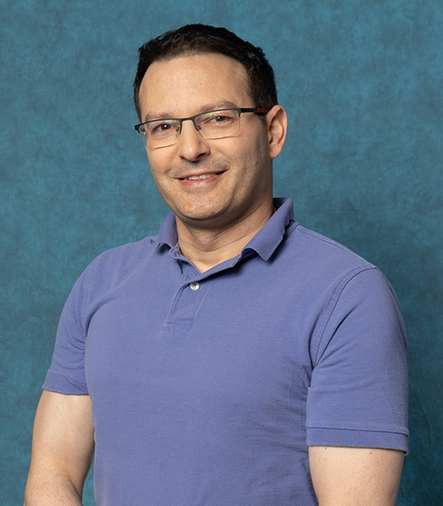
Alongside Yongxin Zhao, PhD, from Carnegie Mellon University, and Ed Boyden, PhD, from MIT, Or Shemesh, PhD, is representing the University of Pittsburgh with the Shemesh Lab, which studies counter-disease engineering. The lab is “making new tools to study, mitigate, and reverse devastating diseases of the nervous system,” according to its website.
“The grant will support the development of new imaging technologies and proof-of-concept studies that let us see, for the first time, how microbes interact with brain cells at the nanoscale,” Dr. Shemesh said. Funds will support postdoctoral researchers and students, specialized reagents, advanced microscopy, and animal models. “The goal,” Dr. Shemesh said, “is to build a foundational ‘toolbox’ that the entire scientific community can use to study how infections contribute to aging and diseases like Alzheimer’s.”
Dr. Shemesh’s work focuses on developing new molecular and imaging technologies to understand how infections and immune responses drive neurodegeneration. Although his primary disease focus has been Alzheimer’s and brain aging, “the core tools we build, especially expansion microscopy and high-resolution molecular mapping, are directly relevant to ophthalmology because the retina is part of the central nervous system and infectious etiology could apply to AMD,” he explained. “These technologies allow us to visualize disease processes in neural tissues at unprecedented resolution, which is critical for understanding and treating retinal degeneration and vision loss,” he added.
Dr. Shemesh joined the University of Pittsburgh in 2021 and moved to the Department of Ophthalmology in 2025. He has won numerous awards, including the NIH Trailblazer Award for Early Stage Investigators, the Chorafas Prize by the Karolinska institute, and the Simons foundation, and has already been funded by the Reeves Foundation for blindness research, the NIH for Alzheimer’s research and the Pitt Alzheimer’s Disease Research Center for tauopathy research.