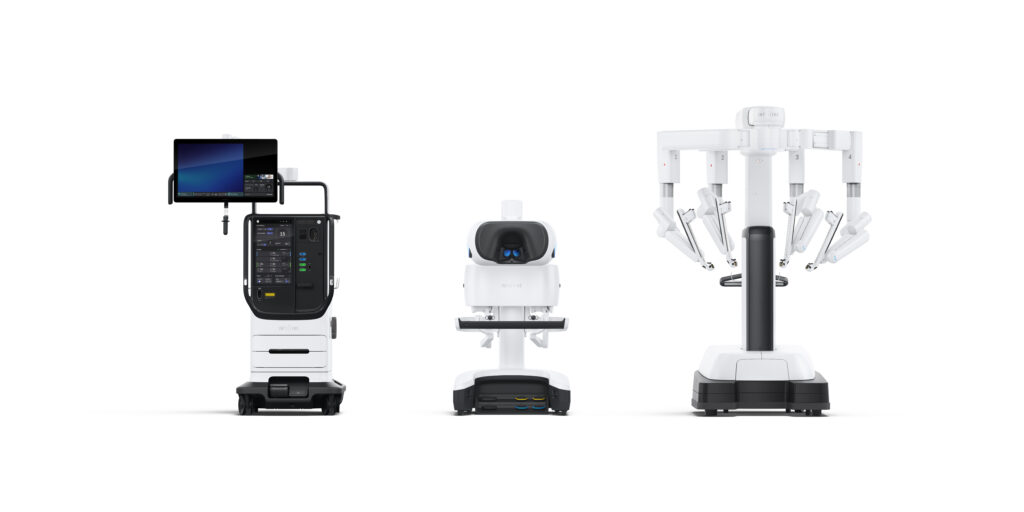
As part of the Head and Neck Division’s move to Shadyside, a single port (SP) robotic platform has been added to its surgical technology suite. While this is not novel, it is the only one approved for head and neck and expands Pitt’s transoral robotic surgery (TORS) capabilities, enabling broader access to minimally invasive treatment options for patients with head and neck cancers.
“Robotic surgery has been a long tradition here,” said Matthew Spector, MD, FACS, Division Chief, Head & Neck Surgical Oncology & Microvascular Reconstruction. “We’re bringing more and more patients in for it.”
In fact, a significant trial was recently conducted out of Pitt that showed robotic surgery by lower dose radiation was a great option for patients with HPV+ oropharynx cancer.
The SP robotic platform typically has two consoles: one for teaching, and one for operating. The difference with this robot is the single port, which refers to a main port that has a grasper, cutting tool, and camera. Since getting into the mouth can be tricky, this makes access easier.
The teaching arm can be used by the faculty or fellows to sit down with the robot and understand its movements. The operating arm means there is always a person using suction or retraction – making sure the arms are being deployed properly, that there is no damage to any of the dental structures, and help facilitate the surgery.
Plans are in the works to train the nursing staff, residents, and fellows on the platform.