Sight + Sound, Spring 2026
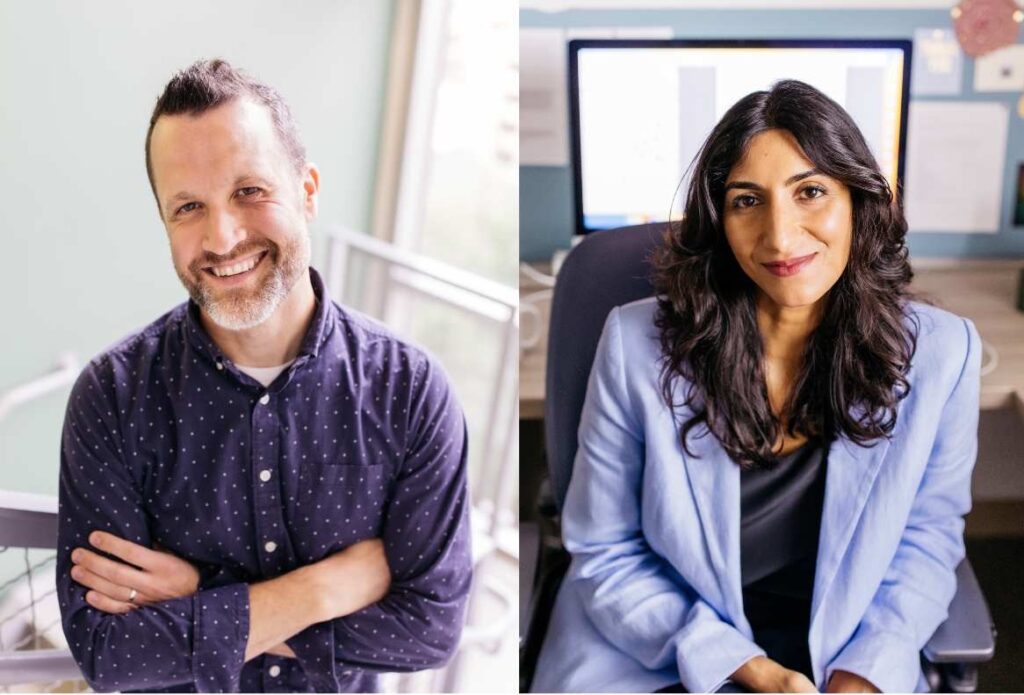
Two scientists in the Department of Otolaryngology-Head & Neck Surgery whose major grants were suspended due to NIH funding cuts are recipients of the Al Muse Recovery Fund.
This Fund, created by the Eye & Ear Foundation Board, honors Al Muse, a founding member of EEF who passed away last May. He was a former chair and the longest serving Board member. The purpose of the fund in his name is to support funding cuts in the Departments of Ophthalmology and Otolaryngology-Head & Neck Surgery.
Chris Cunningham, PhD, had been working on a project seeking to uncover the molecular mechanisms that regulate the trafficking and localization of essential auditory protein complexes in sensory hair cells, which convert sound waves into neural signals. A key focus was understanding how mutations associated with hearing loss disrupt these processes. As hearing loss is one of the most prevalent sensory deficits, with no FDA-approved biological therapies, there is a critical need for biological therapies capable of restoring natural hearing.
The team has identified novel genes linked to genetic forms of deafness and is generating mouse models to investigate their function. “Critically, we are also developing gene therapies designed to restore hearing in these models,” Dr. Cunningham said. “By identifying new molecules and regulatory checkpoints essential to auditory function, this research holds significant promise for the development of gene therapies and other therapeutic strategies to prevent or treat hearing loss.”
Michele Insanally, PhD, is investigating the neural basis of auditory perception and learning. Her project involves trying to understand how the brain flexibly gates the behavioral relevance of sounds in dynamic environments using cutting-edge techniques including high-density neural recordings, optogenetics, and computational approaches. “We lack a fundamental understanding of how the brain processes acoustic signals that ultimately result in hearing and the ability to communicate and navigate complex environments,” Dr. Insanally said.
The results from the proposed experiments are expected to provide critical insights into improved diagnosis and treatment of hearing deficits caused by disease or injury and inform targeted therapies for central auditory processing disorders.
The project has already yielded significant findings and resulted in a high impact manuscript currently in revision at Nature, a top scientific journal. Dr. Insanally has been invited to numerous high-profile conferences and institutions to discuss the findings as a keynote speaker and invited lecturer.
“The Muse Recovery Fund cannot replace the original support promised by the NIH grants,” said Lawton Snyder, CEO of the Eye & Ear Foundation. “However, it serves a purpose to keep the research activity going until the investigators can apply for the next cycle of grants.”