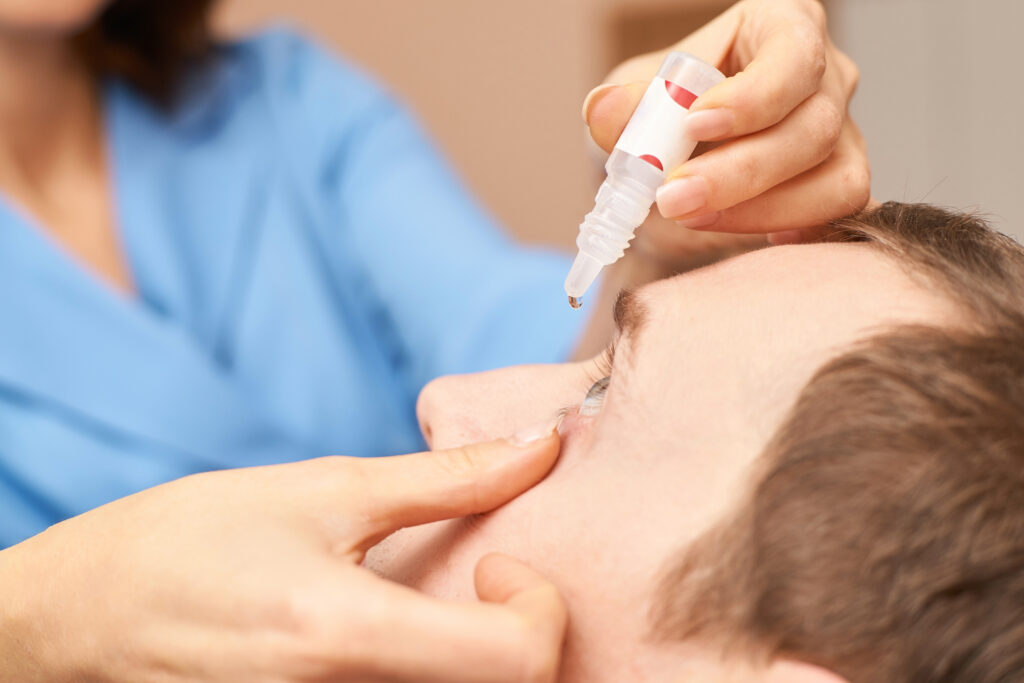
The Department of Ophthalmology and the Division of Rheumatology and Clinical Immunology at the University of Pittsburgh have joined forces to create the Sjögren’s Dry Eye Clinic, the only one of its kind in Pennsylvania. On the first Tuesday of every month, Vishal Jhanji, MD, FRCS, FRCOphth, Professor of Ophthalmology, is joined by Rachael Gordon, MD, PhD, Assistant Professor in the Division of Rheumatology and Clinical Immunology, to jointly evaluate patients with both rheumatologic and ocular manifestations of Sjögren’s disease.


“This clinic has clearly been of significant benefit to our patients,” Dr. Jhanji said.
Understanding Sjögren’s Disease
Sjögren’s is a systemic autoimmune disease that affects the entire body. The immune system mistakenly attacks moisture-producing glands, leading to the hallmark symptoms of dry eyes and dry mouth, but can also cause fatigue, joint pain, and involvement of other organs such as the lungs, kidneys, and nervous system. In the eye, Sjögren’s-related inflammation can cause severe dry eye disease and corneal damage that, if left inadequately treated, may result in permanent vision impairment.
Dry eye affects approximately 8% of Americans over the age of 50, and roughly 1 in 10 of those patients have underlying Sjögren’s disease. Establishing the diagnosis requires a rheumatologic evaluation, including serologic testing and clinical assessment, and patients need both specialties need to be involved for appropriate management.
“Sjogren’s is truly a systemic autoimmune disease and requires a team-based approach to best care for our patients,” said Dr. Gordon.
Treatment
Ocular treatment focuses on topical anti-inflammatory eye drops, autologous serum eye drops derived from the patient’s own blood, and artificial tears for symptomatic relief. In addition to managing the ocular disease, the rheumatologist evaluates each patient’s broader disease picture. Systemic rheumatologic therapies are considered on an individual basis depending on the extent and nature of each patient’s disease manifestations beyond the eye. The value of this clinic is that all these decisions are made collaboratively between rheumatology and ophthalmology in a single visit, rather than through fragmented communication across separate offices.
In 2024, Dr. Gordon launched the first comprehensive Sjögren’s center at UPMC, dedicated to the clinical care of patients with Sjögren’s disease and the advancement of research into innovative therapies.
Who Should Be Referred
The Sjögren’s Dry Eye Clinic is specifically designed for patients with Sjögren’s disease and accepts referrals from primary care physicians, rheumatologists, ophthalmologists, and optometrists. Appropriate candidates are those with a confirmed diagnosis of Sjögren’s disease, as well as those with a strong clinical suspicion for the condition. This includes patients presenting with dry eye disease alongside features that raise concern for an underlying rheumatologic condition, such as dry mouth, unexplained fatigue, joint pain, or positive autoimmune serologies. Patients with dry eye alone, without rheumatologic features suggestive of Sjögren’s, are better served through standard ophthalmologic care.
The clinic currently sees 12-15 patients each month. “We are expanding to double these numbers later this year,” Dr. Jhanji said.
For referrals or appointments, please contact the UPMC Vision Institute at 412-647-2200.