Targeted mutation correction is well-suited to treat genetic diseases in which many patients have a small number of mutations. But many genetic diseases are caused by large numbers of pathogenic alleles, with each mutation affecting few patients. One obstacle in treating rare genetic diseases is the extensive mutation heterogeneity, especially in ocular disorders.
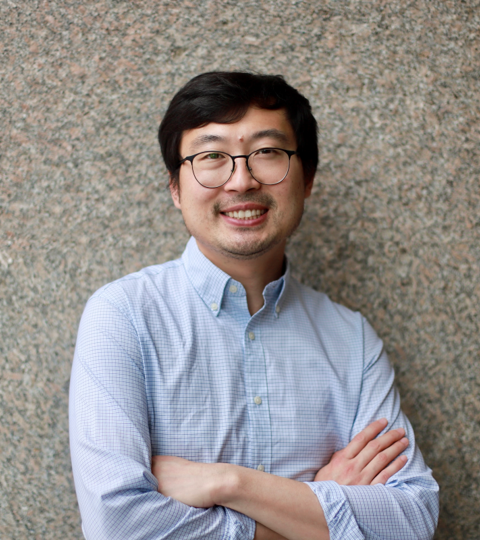
Hoping to address this issue, Xin “Daniel” Gao, PhD, is working on developing mutation and gene-agnostic editing strategies.
Called a rising leader in genome engineering and therapeutic biotechnology, Dr. Gao came to Pitt from a postdoctoral fellowship at the Broad Institute of MIT and Harvard. He has developed foundational tools that advance the frontiers of genome editing, and his research has led to innovations such as the Twin Prime Editing and eePASSIGE system — enabling precise and programmable integration of large DNA sequences — and in vivo base editing therapeutics for genetic diseases like Zellweger Spectrum Disorder.
Another motivation to develop agnostic gene editing strategies is the cost of genomic medicine. Take CFTR (Cystic Fibrosis Transmembrane Conductance Regulator) gene mutations, of which there are more than 2,000. If a healthy gene can be inserted, that would potentially bypass developing more than 2,000 different editing strategies. “For genetic medicine, if we have one that can be applied to multiple patients with different pathogenic alleles, then the cost can potentially be lower,” Dr. Gao said.

Among the several projects in the Gao Lab aimed at advancing therapeutic gene writing, one focuses on installing a trophic factor that could benefit patients with many different mutations that lead to retinal degeneration. This idea is based on the observation that loss-of-function mutations in distinct genes can converge on shared retinal degeneration pathways, building on foundational biological discoveries by Drs. José-Alain Sahel and Ait-Ali Maamri. “What if we can write a beneficial factor into a “safe harbor” site in the patient’s genome that could overcome conventional gene therapy’s challenge with long-term expression and transgene silencing?” asked Dr. Gao, who believes that mutation-agnostic and gene-agnostic genome engineering strategies will have the potential to reshape the future of both genome engineering and therapeutic development.
In the meantime, the lab is working on the delivery, seeing how it can be optimized to accommodate various therapeutic cargos and target the disease cell types efficiently and safely. They are also developing high-throughput genetic screen approaches to interpret genetic information and harness these insights for developing novel neuroprotective strategies.
“To summarize,” Dr. Gao said, “we are passionate about developing large-scale, novel gene writing methods to expand our targetable range of mutations, and hopefully reduce the cost of genetic medicine, because the universal applicability of these strategies is higher than the targeted therapy. There’s a lot of ongoing discussion and improvement in the regulatory process that we truly hope will accelerate the development precision and safe genetic medicine to use for ocular and other rare genetic diseases.”