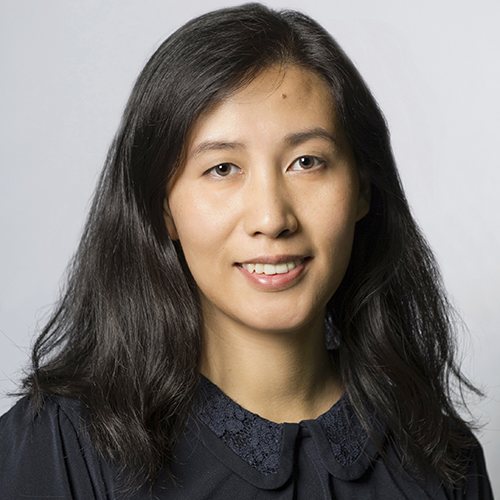
The Systems Pharmacology Lab of Retinal Degenerationof Yuanyuan, run by Yuanyuan Chen, PhD, focuses on pharmacological studies of inherited retinal disease and age-related retinal degeneration. The lab develops drug screening assays to identify small-molecule drugs with efficacy in improving protein homeostasis, reducing retinal inflammation, and protecting retinal neurons from degeneration. The long-term goal is to provide new drug candidates and repurposed drugs with compelling efficacy in preclinical models and advance these molecules into large animal studies and clinical trials.
The lab has developed several lead compounds, including first-in-class non-retinoid rhodopsin chaperones, the repurposed drug methotrexate for selective clearance of misfolded rhodopsin mutants to improve retinal function, the collaborative discovery of 8-aminoguanine for multi-organ protection in aging and chronic disease models, and the collaborative identification of pyrvinium pamoate as a retinal protectant in an ex vivo model of retinitis pigmentosa.
Their pioneering work on methotrexate in a rodent model of retinitis pigmentosa was licensed by Aldeyra Therapeutics, which conducted a clinical trial of intraocular methotrexate injections in RHO-retinitis pigmentosa patients and announced short-term visual functional improvement in 2023.
The lab is currently exploring systemic administration of methotrexate in their animal model to develop a non-invasive treatment route. They are also advancing multiple promising projects — pyrvinium pamoate and 8-aminoguanine — toward preclinical and clinical translation.
“Collaboration is central to how my research program grows and deepens in scientific rigor,” Dr. Chen said. She added that the greatest strength of working in Pittsburgh is the collaborative culture.
Dr. Chen has an active collaboration with Drs. José-Alain Sahel (Department of Ophthalmology), Edwin Jackson (Department of Pharmacology and Chemical Biology), and Lori Birder (Department of Medicine) on the development of 8-aminoguanine for treating age-related macular degeneration; they have secured several funding awards and have a pending patent on this project.
Dr. Chen’s work on pyrvinium pamoate is in collaboration with Dr. Bokai Zhu at the University of Pittsburgh Aging Institute, supported by a competitive Foundation Fighting Blindness Brint Family Translational Research Award and a pending patent. She collaborates with Drs. Shaohua Pi and Sahel in the Department of Ophthalmology on an OCT-augmented drug-screening platform using retinal explants, supported by the Hillman Collaborative Research Project Award, with a patent application filed.
Dr. Chen also collaborates with Dr. Christina Zeitz at Institut de la Vision on Congenital Stationary Night Blindness (CSNB), with a manuscript in preparation reporting a potential new associated gene. Additional collaborations include work with Dr. Leah Byrne using postmortem human retinal biopsies to assess AAV transduction and drug safety, with Dr. Boris Rosin on electrophysiological effects of drugs on inner retinal neurons, and a new collaboration with Dr. Ekaterina Lobanova in the Department on drug screening for NFE2L1 activators to boost proteostasis in ocular proteinopathies such as retinitis pigmentosa.
Dr. Chen recently received a competitive renewal of a NIH R01 grant entitled “Pharmacological studies of RHODOPSIN-associated retinitis pigmentosa” with an impact score of 31 at 5%. Co-Is of this grant include Drs. Shaohua Pi and Edwin Jackson.
“The breaking down of boundaries between laboratories, departments, and institutions allows us to become competitive and lead teams,” Dr. Chen said. “Dr. Sahel is a remarkable leader in making this happen, and many of my own collaborations have been catalyzed by his efforts. One example: my student Riley Arbuckle had a unique Ph.D. training experience conducting research at Institut de la Vision with Dr. Zeitz for six months, supported by the Chateaubriand Fellowship. As a result, we were able to correlate our discoveries in animal models with genetic mutations in human patients — significantly elevating the impact of our research.”
Indeed, Dr. Chen added, “the connections among patients, physicians, scientists, and trainees create a dynamic and energizing environment that drives innovation, collaboration, funding, and philanthropic investment.”