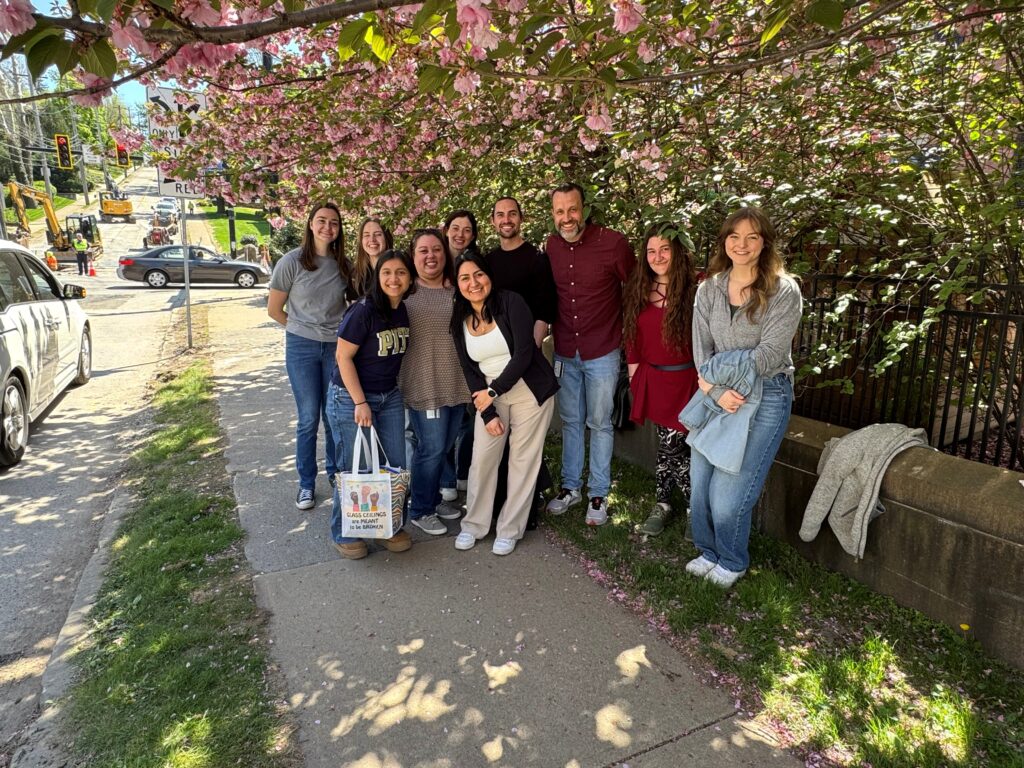
Christopher L. Cunningham, PhD, Assistant Professor in the Departments of Otolaryngology-Head & Neck Surgery and Neurobiology and faculty member in the Pittsburgh Hearing Research Center (PHRC) is continually amazed at how common hearing loss is. He spoke about his work at the Eye & Ear Foundation’s June 25th webinar, “Gene Therapies for Hearing Loss: Treating Defective Genes and Beyond.”
Hearing Loss is a Common Problem
Hearing loss is a significant worldwide problem, Dr. Cunningham said. One in 500 children are born with hearing loss, with 50-80% due to genetics. About 5% of the global population, or 430 million people, experience disabling hearing loss that requires rehabilitation.
As we age, the prevalence of hearing loss increases. Over the age of 60, more than half of individuals have hearing loss.
Treatment options usually do not address the primary cause. Current therapies are artificial devices like hearing aids or cochlear implants. While they are amazing, life-changing devices, they do not address the primary cause of the hearing loss. They attempt to minimize/overcome secondary dysfunction. There are variable efficacies, they provide artificial hearing, and benefits are often not maintained long-term.
The Cunningham Lab
Dr. Cunningham started his lab in 2021. He said it is full of “amazing, more talented people than I am, more creative, and I’m so fortunate to work with them.” The work being discussed in this webinar is all work they did. The Lab is working together to accomplish three main goals:
- How does the normal cochlea convert sound into neural signals? Funding from the NIH (RO1, R21), Edith Trees Foundation
- From damage to hearing loss: what happens inside the cochlea? Funding from the PA Lions Hearing Research Foundation, American Otological Society, University of Pittsburgh Competitive Research Award
- Can we develop biological therapies to treat hearing loss? Funding from NIH (STTR R41), Dept of Defense Hearing Restoration Research Program, the UK Royal National Institute for Deaf People, the PA Lions Hearing Research Foundation, the University of Pittsburgh Innovation Institute, and EEF
Tools and strategies employed by the Lab include:
- Mouse models to generate hearing loss DNA mutations in mice
- Hearing function testing including Auditory Brainstem Response (ABR) and Distortion Product Otoacoustic Emissions (DPOAE)
- Microscopy to look at molecules, cells, and structures of the cochlea
- Biochemistry and molecular biology to test how deafness-linked DNA mutations affect structure and function
Why the mouse as a model for development of hearing loss therapies? The mouse is actually an excellent model for studying the inner ear, auditory system, and developing therapies because the mouse cochlea structure looks the same as a human. It’s a little bit smaller, but hearing loss in the mouse is virtually the same in onset, severity, pattern, and progression to humans.
Gene Therapies
Genes are the instructions for the synthesis of all the cellular components (e.g. proteins), Dr. Cunningham explained. Proteins allow cells to perform their functions (i.e. sound processing).
So, if there is a DNA mutation that makes the gene not function properly, this leads to abnormal structure and function in these critical proteins for sound processing – which leads to hearing loss.
Many types of gene therapies exist. They can either target the gene directly in vivo or certain cells can be taken out of the body, treated with gene therapy, and put back in.
The gene therapy the Cunningham Lab is working on – and that all hearing loss therapies are typically being developed – are based on in vivo treatment. The Lab is delivering a replacement normal functional copy of the DNA to the cells and then the cell’s own machinery makes functional protein that enables the cell to act normally again. The DNA is delivered through an adeno-associated viral vector, basically some DNA surrounded by a protein coat. It is based on a virus that naturally occurs without any harmful effects.
Three companies have developed gene therapy for one form of hearing loss are in clinical trials right now in humans. This is for otoferlin-linked non syndromic hearing loss, or DFNB9. The results have been astounding. It worked ok in animal testing and even better in humans, which is rare. The FDA just approved the first ever gene therapy for Decibel/Regeneron.
“We’re moving in the right direction toward actual biological therapies for hearing loss,” Dr. Cunningham said. “However, there’s still a lot of work that needs to be done.”
Precise Gene Therapy
Mutations in numerous genes cause hearing loss. In fact, mutations in over 100 genes cause non syndromic hearing loss, and over 700 genes cause syndromes that include hearing loss. Otoferlin is only one of hundreds of deafness-linked genes.
Most preclinical (animal model) hearing loss gene therapy experiments only exhibit partial improvement because deafness-linked genes affect multiple cell types in the cochlea. It boils down to current gene therapy approaches lacking precision. Current therapies lack specificity (have off-targets) and often fail to restore normal protein levels. These limitations prevent complete hearing restoration and/or cause toxicity.
The Cunningham Lab’s goal is to develop a precise gene therapy to only target hair cells. Hair cells in the cochlea are the mechanical sensors of the auditory system. Mechanotransduction channel function in cochlear hair cells is critical for hearing.
TOMT
TOMT is critical for the whole process of mechanotransduction and hearing. Mutations in TOMT cause non syndromic hearing loss DFNB63 in humans and profound deafness in mice. Up to 8% of all genetic forms of hearing loss are due to mutations in TOMT. TOMT is critical for function of cochlear hair cells, but the structure of the cochlea in individuals with mutations is intact. This leads to the question; can we use gene therapies to restore auditory function in TOMT mutant mice?
The Lab made AAV-based gene therapies that contain TOMT, a normal copy of the gene, along with something (called a promoter) that regulates the expression, its levels, types of cells TOMT goes into, and then this is injected into the inner ear of mice. The mice’s hearing is then tested.
However, before doing this, toxicity studies had to be done to make sure the therapies were not harmful. One thing the team noticed that was surprising is when they injected the gene therapies containing components from other gene therapy companies with TOMT into normal hearing mice, it caused the mice to have elevated hearing thresholds. In this case, higher is bad. The mice became close to profoundly or severely deaf. The components they used are part of therapies being used in clinical trials for humans with otoferlin.
“We wanted to look in the cochlea of the mice to figure out what was going on,” Dr. Cunningham said. “Why are the mice so deaf?”
They found that gene therapy is killing the inner hair cells. Hair cells in mammals do not regenerate, which is why the mice were becoming deaf. The team believes a big part of this is because the therapies were not targeting the hair cells specifically, just a bunch of different cells in the cochlea.
TOMT is expressed specifically in hair cells. “We think it’s possible that if you put TOMT in other cells around hair cells, it can be toxic, which can lead hair cells to die,” Dr. Cunningham explained.
Gene Therapy Specific for Hair Cells
The team went back to the drawing board to develop their own gene therapy. Eventually, they found a promoter specific for hair cells and injected it with TOMT into newborn mice. They then took out the cochlea and looked at it under a microscope. The exciting news is precision gene therapies with TOMT do not cause hearing loss in normal mice and do not kill hair cells.
The same experiment was conducted where mice were injected as babies and then had their hearing tested as adults. The therapy was basically the same as normal and did not cause toxicity.
“When you look at the cochlea, Company One’s therapy killed all inner hair cells,” Dr. Cunningham said. “With our therapy, the cochlea looks the same as an untreated cochlea, except there’s gene therapy all throughout it. It is really really exciting because we have specific, efficient delivery but don’t cause toxicity.”
The result lasts for at least four months, which is the longest they have tested. Dr. Cunningham anticipates it will last longer.
Precision gene therapy also leads to recovery of balance in mice. Oftentimes with the mutation that affects hearing, balance is also affected. With mice that also had balance issues, gene therapy was injected and then a balance assessment performed. After the therapy, they behave like normal mice again.
Advancing Gene Delivery
With Adele Moatti, PhD, Dr. Cunningham got a RNID grant to test gene therapy in large animals. Dr. Moatti does a lot of work in the pig model and has started testing gene therapies in the pig. The Cunningham and Moatti Labs have plans to test different gene therapies, including the one they developed for TOMT, in the pig model.
Dr. Cunningham is also developing gene therapies for targeting hair cell regeneration with Melissa McGovern, PhD. Dr. McGovern has figured out a cocktail of factors that if given to surrounding supporting cells in the cochlea, those cells can be convinced to turn into hair cells. So, for the forms of hearing loss where hair cells are lost, there is potential to generate hair cells. Drs. Cunningham and McGovern got a Department of Defense grant to work on this, which is early work but exciting.
All of this work together culminated in the formation of Echogenesis Therapeutics, where the goal is to move this therapy from the academic lab to the clinic. In order to do this, a company had to be created. It was incorporated in 2024 with Thanos Tzounopoulos, PhD, and José P. Zevallos, MD, MPH, FACS. The company was quickly awarded a Phase I grant, a small business grant, which Drs. Cunningham and Tzounopoulos have been using to do additional work. They are working on submitting more funding and also applied for a patent.
Broadening Precision Gene Therapy Utility
Most adult-onset hearing loss is due to combinations of aging and noise exposure. One in 4 adults have hearing loss due to exposure to too much noise. People 65 and older are five times more likely to have hearing loss than those younger than 65.
“We want to take the tools we’ve developed – our cell type specific therapies – and apply them to these types of hearing loss,” Dr. Cunningham said.
A leading hypothesis for causes of aging and noise-linked hearing loss is loss of hair cell synapses. Can cell-type specific gene therapy be used to regenerate synapses? They are working on taking these therapies and moving them toward regenerating synapses. They already have some data showing that they can do this in genetic forms of hearing loss and now they want to do it in age-related and noise-induced hearing loss.
“Development of precision gene therapies for hearing loss is critical!” Dr. Cunningham said. “And we cannot do this without strong support for basic and translational research.”
There will not be a one-size-fits-all therapy, as there are hundreds of genes. “Everything we’re learning by developing one will help us develop more gene therapies,” he added. “Basic research provides all the information that we have so we can develop the therapies. It’s foundations like EEF that allow us to do this work and move toward real biological therapies for hearing loss.”