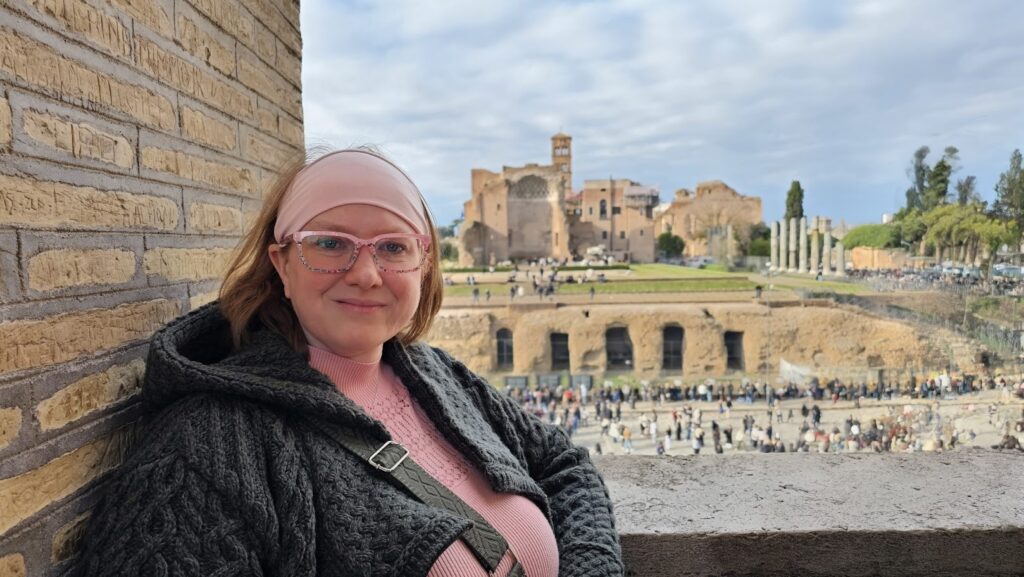
Kelly McSorley has been part of the UPMC Head & Neck Cancer Survivorship Program for three years since starting treatment. She truly believes that getting connected before radiation is key.
“It helps you understand that you have a strong support system in place before you begin,” the 38-year-old Pittsburgh resident said. “You know there are multiple people actively monitoring your health and supporting you along the way. I also really value being able to contribute to research and help support future patients going through similar experiences.”
Cancer Journey
Kelly’s cancer journey has been long. She had what she thought was a blister on the right side of her tongue. When she mentioned it during a routine dental appointment, they were not sure what it was and referred her to an oral surgeon. The surgeon saw her within the week, examined it, and scheduled a biopsy three weeks out. However, by the end of that same week, it had become so painful Kelly could barely eat or talk. She called and said she could not wait three weeks. The next day, the doctor took one look and said he was not comfortable performing the biopsy for fear of causing more damage.
The day after that, Kelly saw an ENT, who performed a punch biopsy. A few days later, in November 2021, cancer was confirmed. In December 2021, Kelly had a partial glossectomy, followed by a right neck dissection in January 2022.
In February 2023, Kelly experienced a recurrence at the base of her tongue. The only symptom she had was persistent headaches on the right side of her head that no medication relieved. She underwent three rounds of chemotherapy and immunotherapy. The treatment was effective, reducing the tumor by nearly half.
In May 2023, Kelly had major surgery, including a subtotal glossectomy, bilateral neck dissection, and reconstruction using a forearm free flap. Following surgery, she completed five rounds of cisplatin and 30 rounds of radiation, finishing treatment in August 2023.
Now, three years out, Kelly is able to eat and drink normally, which she is incredibly grateful for. Her speech has been impacted, so she is working on getting a second prosthesis made; she already has one to help with eating as her flap shrank and her tongue is tethered to the floor of her mouth.
Survivorship
Kelly’s radiation oncologist recommended the Survivorship program before she began treatment. As part of the program’s Enhanced Care study, she had weekly check-ins with a nurse and speech language pathologist. The dietician also met with her, though that was not part of the study. During the check-ins, they went over her symptoms, how she was feeling overall, checked her weight, and reviewed other important health factors to make sure she was staying as healthy as possible.
“What really stood out to me was how much it made me feel seen and heard,” Kelly said. “It provided an added layer of support beyond my direct doctors, which made a big difference during such a challenging time.”
Being a Young Survivor
Kelly admitted that being a young cancer survivor is not easy. “One of the most frustrating parts is the assumptions people make—especially being asked if I smoked, drank heavily, or what I did to ‘cause’ my cancer,” she said. “The truth is, it was just bad luck. I’ve never smoked, and I’m not a heavy drinker.”
Kelly often felt out of place during treatment, as she was almost always one of the youngest people in the waiting room. At times she felt closer in age to the nurses caring for her than the other patients.
“There’s also an expectation that because you’re young, you should bounce back more quickly—but that’s not the reality,” Kelly added. “Chemotherapy and radiation take a significant toll on your body, regardless of age.”
What Kelly wants others to understand is that anyone can get oral cancer. It is not limited to smokers, heavy drinkers, or those who are HPV-positive. Sometimes it simply comes down to bad luck, and it is important not to judge others based on assumptions.
She does think her experience was a bit different because she was very vocal about her care. She listened to her body and spoke up when something did not feel right. She also approached recovery in her own way, working right up until the week of her surgery and returning to work after only five months on leave.
The Right Mindset
A quote and mindset that helped Kelly get through everything was this: When people would tell her how positive she was, she would say she really only had two choices. She could either be consumed by the situation or choose to stay as positive as possible. “I had already beaten this once, and I was determined to beat it again,” she said.
At the same time, Kelly wants people to know that it is okay to feel everything. “You are allowed to be mad, sad, angry, depressed, or even hopeless,” she said. “Those feelings are completely valid. But the key is not to live in those emotions. You have to let yourself feel them – have a good cry, scream, or let it out – and then find a way to move forward.”
Maintaining a positive mindset does not mean ignoring reality, Kelly said, but it can truly make a difference in how you get through it. Most importantly, she added, always advocate for yourself. “You are the one going through this,” she advised. “Let your doctors know how you’re feeling, what you’re experiencing, and what you’re comfortable with when it comes to your treatment. Your voice matters and being heard is a critical part of your care.”