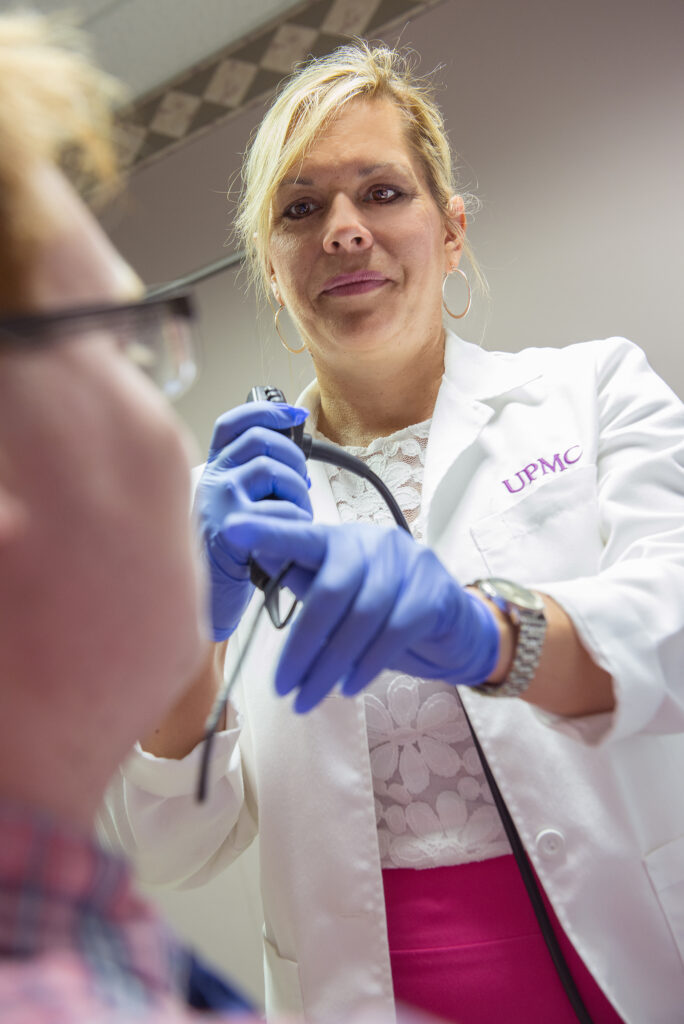
The Laryngology and Speech-Language Pathology Divisions are working together to address an often-unmet need: supporting caretakers of individuals with intellectual and developmental disabilities (IDD) who need swallowing help.
Individuals with IDD are at risk for developing adverse events related to dysphagia, or difficulty swallowing. This can lead to serious health issues including dehydration, malnutrition, and aspiration pneumonia. According to data from the National Vital Statistics System (2005-2017), the leading cause of death among adults with IDD has been associated with respiratory-related conditions and choking. Dysphagia also tends to progress with age in this population, resulting in greater reliance on adaptive equipment and modified diets.
“Caretakers often serve as the primary support for IDD and play a critical role in reducing the risks associated with dysphagia,” said Tamara Wincko, MS, CCC-SLP, Director of the SLP Division. “However, without proper training and awareness of symptoms, they may be ill-equipped to manage it effectively. Dysphagia remains under-recognized in this population, and research on its management is currently limited.”
Several ideas are in the pipeline, with funding support from the Edith L. Trees Charitable Trust. “Ultimately, the best educational approach depends on our target audience,” Wincko said. Caretakers in the community – particularly those supporting individuals in group homes – may not always have access to resources on this topic. Thus, additional exploration is needed to identify the most effective methods for educating them.
One idea is a web-based application, where caregivers can go to find important resources and patient specific materials on dysphagia management. The Head & Neck Surgery Division is creating one now for educational purposes, with the goal of a broader rollout. An important consideration, however, is whether such an app would be widely adopted and utilized by caregiver teams.
In the meantime, Wincko has filmed two videos that will be disseminated: one for how to help individuals with IDD brush their teeth, as they often dislike this task, and one about IDDSI diet information (identifying the diet texture that will help reduce symptoms).
In another attempt to share information, Wincko is working on a document to be shared with patients during clinic visits as supplemental educational material and distributed to caregivers at discharge from UPMC hospitals and WPIC. This document will have QR codes incorporated for each topic; caregivers can simply scan the code to learn more. One sample document states, “Caregivers have an important job in watching for signs of difficulty with swallowing. Knowing what to look for can help prevent choking and lung infections like pneumonia. Learning simple tips and safe ways to eat and drink can help keep your loved one safe.”
Topics include mouth care, mealtime checklist (what to do before, during, and after a meal), diet information, red flags, and getting help.