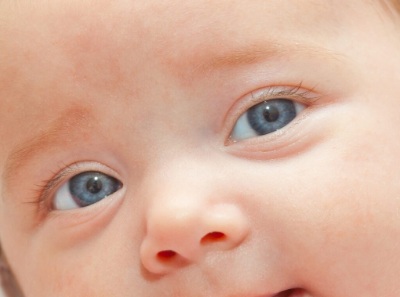
The Eye & Ear Foundation’s July 27th webinar was titled, “Beyond the Eye Movements: Understanding the Clinical and Genetic Causes of Pediatric Nystagmus.” The presenters were Preeti Patil, MD, a pediatric ophthalmologist and neuro-ophthalmologist who runs the Nystagmus Clinic at Children’s Hospital of Pittsburgh, and Hannah Scanga, MS, CGC, a board-certified, licensed genetic counselor at Children’s Hospital and the UPMC Vision Institute.
What is Nystagmus?
Nystagmus (ni-STAG-mus) is an involuntary, repetitive eye movement that occurs when the eyes are trying to look at something. The eyes may move side to side, up and down, or in a circular or diagonal pattern. Movement can be constant or intermittent.
Keeping our eyes steady is an active process. Many systems work together. Nystagmus happens when one or more of these systems are not working properly. Our eyes stay still (or have a normal fixation) through this process:
- Clear visual input: the eyes send a clear, focused image to the brain
- Brain control of eye movements: the brain constantly fine-tunes eye position to keep the image steady
- Balance (vestibular) system: helps keep vision stable when the head moves
- Fixation system: allows us to keep looking at one object without our eyes drifting
The result is that our eyes stay steady and we see clearly.
Nystagmus can occur in the following scenarios:
- Poor visual input from the eyes
- Cataracts
- Albinism
- Retinal disorders
- Optic nerve disease
- Other eye conditions
- Problems in the brain pathways that control eye movements: these pathways help the eyes move smoothly and stay on target
- Disorders affecting the balance (vestibular) system: when balance signals are not normal, eye movements can become unstable
- Difficulty keeping the eyes steadily focused on a target: problems with the systems that hold gaze steady can lead to nystagmus
If any part is affected, involuntary, repetitive eye movements occur.
Nystagmus is not a disease. It is a sign that one or more parts of the visual or nervous system is not working as it should. Finding the cause helps guide the right care and support.
Causes of Nystagmus
Nystagmus can occur when there is a problem in any part of the visual system.
Ocular causes:
- Anterior segment causes
- Cataract (congenital or acquired)
- Corneal opacities/scars/dystrophies
- Anterior segment dysgenesis
- Persistent fetal vasculature
- Optic nerve disorders
- Optic nerve hypoplasia
- Optic atrophy – congenital or acquired
- Ischemic/inflammatory optic neuropathies
- Retinal disorders
- Coloboma/choroidal/retinal
- Retinal dystrophies (e.g. RP, LCA, cone-rod dystrophy)
- Albinism (ocular)
- Macular/foveal abnormalities
- Retinopathy of prematurity
- Other retinal degenerations
Neurologic Causes
- Brain mass lesions
- Tumors (e.g. cerebellar, brainstem, OPG)
- Chiari malformation
- Arachnoid cysts
- Vascular lesions
- Hydrocephalus/increased ICP
- Demyelinating diseases
- Multiple sclerosis
- Neuromyeltis optica spectrum disorder
- MOG antibody-associated disease
- Acute disseminated encepheliomyelitis
- Other neurological disorders
- Perinatal brain injury
- Cerebral palsy
- Neurodegenerative disorders
- Genetic/metabolic disorders
- Epilepsy
- Parkinson disease
- Migraine/vestibular disorders
- Drug/toxin produced
- Anticonvulsants (e.g. topiramate)
- Lithium
- Alcohol
- Toxic/heavy metal exposure
- Other medications
Idiopathic: idiopathic infantile nystagmus (congenital motor nystagmus)
- Onset in infancy (usually within the first 6 months of life
- No identifiable ocular or neurological cause found
- Thought to be due to abnormal development of the visual system and eye movement control pathways
Identifying the cause of nystagmus helps guide the right evaluation and management for each child. A thorough eye and neurologic evaluation is essential.
What do parents usually notice?
- Baby doesn’t make good eye contact
- Eyes appear to “shake”
- Difficulty tracking faces/toys
- Head turn or head tilt
- Sensitivity to bright light (sometimes)
- Poor vision/delayed visual development
- Eye misalignment (strabismus)
One type of nystagmus is called latent nystagmus. In this case, when both eyes are open, not much shaking is visible. But as soon as one eye is covered, the other one shakes. This is not uncommon and is often associated with some other form of eye misalignment.
Another type is see saw, in which the eyes move like a see saw. One goes up and the other comes down. This is not very common and is often associated with neurologic disease.
Diagnosis
Doctors figure out the cause through a step-by-step evaluation. First is history, in which the doctors learn about the child. They’ll ask about when the condition started, pregnancy and birth, development, family history, other medical conditions, eye surgeries, and other ocular symptoms such as strabismus/eye misalignment.
Next is vision testing to measure how well the child sees. Testing may include visual acuity, fixation and tracking, depth perception, and color vision (if age appropriate).
A complete eye examination then provides important clues. Doctors look at eye movements, head posture, and perform a complete exam including the front and back of the eye after dilation.
Based on the findings, some children may need more testing, like ocular imaging (fundus photos, OCT), electrophysiology (ERG, VEP), neuroimaging (MRI), or genetic testing.
“We put the pieces together to find the cause and create a plan that is right for your child,” Dr. Patil said. “Every child is unique. Not every child needs every test. We tailor the evaluation to your child’s age, exam findings, and overall health.”
Not every child needs an MRI. It is only recommended when there are concerning findings like an abnormal neurologic examination, developmental concerns, unusual eye movements, later onset nystagmus (acquired), or optic nerve abnormalities.
Genetic Testing
Many forms of childhood nystagmus have a genetic basis. UPMC has a dedicated ocular genetics team, with Hannah Scanga as the lead ocular genetics counselor.
Why would someone want a genetic evaluation? Scanga said this can happen at any time in life.
Genetic testing is one tool for care. Understand what tests are available and what they can and cannot tell you, and then implement change based on the results.
Nystagmus before six months of age is a stage in which the most is known. This is called infantile nystagmus. More than 50% of the causes can be determined by genetic testing. Nystagmus that comes on after this is harder to pinpoint a genetic reason, and sometimes the eye is not the primary health concern the person is getting genetic testing for.
In babies under six months of age, if they have nystagmus with reduced vision, retinal or optic nerve changes, fair hair and skin, multiple health conditions, or family history, then genetic testing is a good idea.
Pre-test counseling involves gathering a medical and family history, reviewing genetic concepts and available tests, learning about the types of results and implications, and promoting informed consent and choice.
The genetic test can be done non-invasively with a swab, or through a blood test. That is sent to a specialty lab for analysis, and then the genetic counselor interprets the results.
Post-test genetic counseling involves explaining and documenting the genetic test results, discussing the impacts on care, coordinating follow-up needs, and identifying support services and resources.
Genetic Testing Results
A positive result means a genetic change was found that is likely to affect your health or increase your risk for a condition. It may explain your personal or family history. It could affect your medical management or screening. Your healthcare provider can help you understand the next steps. With albinism, there is a 80-90% chance of receiving a positive test. For retinal conditions, it is closer to 50%.
A negative result means no genetic change was found that is known to cause the condition being tested for. Your result does not rule out all possible health conditions. Your personal or family history may still affect your risk. Follow your healthcare provider’s advice for screening and care.
An uncertain result means a genetic change was found but it is not yet known if it affects your health. Scientists need more info to understand this change. Your result may be reclassified in the future. Check back with your healthcare provider for updates.
Genetic Test Implications
A positive genetic test identifies a specific condition and cause. It also tells you what to watch for. Some conditions are isolated to the eye, while others will direct monitoring. A genetic result may identify potential for treatment – whether now because something is approved, or for something being developed in the future.
Genetic testing can also tell you whether the condition can change over time, as some eye conditions are stable or progressive. Understanding the cause and course may also identify new resources or help initiate support services. Genetic conditions have various patterns in families, whose risk can vary by gender and relationship, so this is important information for them as well.
Nystagmus as a Sign of Retinal Disease
This is a very common cause of nystagmus. It may be the only sign (at first) or there may be observable retinal changes. It may be a stable condition or associated with progressive vision loss. Gene-specific treatments are available and emerging, and there are hundreds of genetic causes. Genetic testing should include isolated and syndromic causes. This can be associated with other medical conditions affecting development, hearing, and various body systems (heart, liver, kidneys, bones. Genetic testing can determine the need for evaluations and testing.
Nystagmus as a Sign of Albinism
Nystagmus is a primary feature of albinism. Other eye signs include decreased pigmentation of the iris and retina and an underdeveloped fovea. It is associated with reduced but stable vision, with over 30 genetic causes. Genetic testing should include mimickers of albinism. This kind of nystagmus is rarely associated with other medical conditions including bleeding disorders, immune deficiency, hearing loss, and neurologic disorders. Genetic testing can determine the need for evaluations and testing.
Nystagmus Associated with Developmental Eye Conditions or Other Eye Disorders
In this case, nystagmus is one feature of the condition or a consequence of how the eye and its visual structures developed or function. It is a stable condition or can be associated with progressive vision loss and has hundreds of genetic causes. Genetic testing should include isolated and syndromic causes. It can be associated with other medical conditions affecting development, hearing, various body systems (brain, heart, liver, kidneys, bones), and metabolism. Genetic testing can determine the need for evaluations and testing.
Nystagmus as an Isolated Family Condition
In this case, nystagmus is the only observable ocular sign. It is associated with stable vision that may be near normal or reduced. There is one genetic cause – FRMD7, inherited maternally, affecting males more frequently than females. There are no associated medical conditions outside the eye.
To get a genetic evaluation, there are dedicated ocular genetics services at UPMC Children’s Hospital of Pittsburgh and the UPMC Vision Institute. Or, you can talk to your eye care provider about genetic counseling and testing, as well as contact a genetics clinic if not local.
Treatment
Can nystagmus be treated? The eye movement cannot be stopped completely, but vision and function can be improved.
- Glasses – corrects refractive errors to help your child see more clearly
- Contact lenses – may improve vision more than glasses for some children
- Treating underlying eye disease – if a treatable eye condition is causing the nys, treating it can help stabilize or improve vision
- Surgery – can improve head posture and place the “best viewing position” straight ahead. In some cases, it can reduce the intensity of the eye movements. It does NOT cure nystagmus
- Medications – certain medications may reduce eye movement in some children. Used in selected cases, often in conjunction with neurologists because medications come with their own risks and benefits.
- Low vision services – tools and support to help your child learn, read, and participate confidently in daily activities. UPMC has a fantastic low vision center.
“Our goal: better vision, better function, better life,” Dr. Patil said. “Every child is unique. Treatment plans are personalized based on the cause, severity, and your child’s needs and goals. With the right care and support, children with nystagmus can do amazing things!”
Key Takeaways
- Nystagmus is a symptom – not a diagnosis. It is a sign that something in the visual system or brain may need evaluation
- Early evaluation is important. It helps identify the cause, guide treatment, and support the child’s development
- Some causes are treatable or manageable. Finding the cause opens the door to the right care and support.
- Every child does not need every test. We tailor the evaluation to the child’s age, symptoms, and exam findings.
- Surgery can help improve head postures and visual function. In some children, surgery can also reduce the intensity of nystagmus and improve quality of life. It does not cure nystagmus.
- Most children continue to learn, grow, and thrive. With the right care, support, and resources, children can reach their full potential