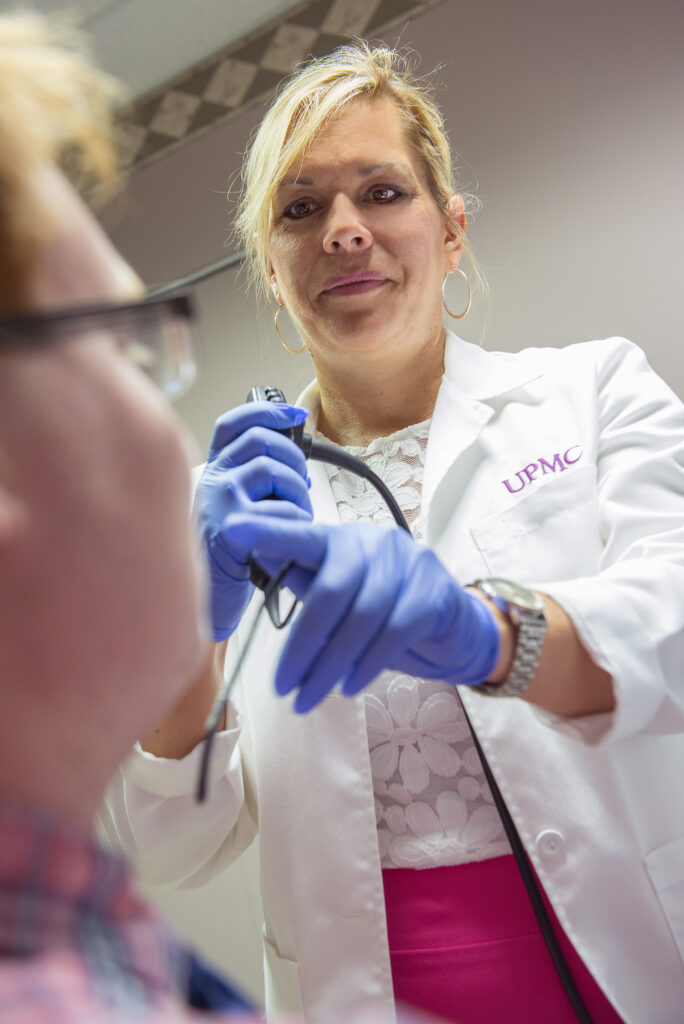
The Department of Otolaryngology-Head & Neck Surgery are helping ensure that individuals with intellectual and developmental disabilities (IDD) are supported. This demographic often has serious but often under-recognized conditions that can threaten health, independence, and quality of life.
Advancing Hearing Health Care
The Edith L. Trees Charitable Trust has bestowed a $1,500,000 grant to the Pittsburgh Hearing Institute to advance hearing health care for individuals with IDD. The grant will disseminate $500,000 per year for three years.
Children and adults with intellectual and developmental disabilities (IDD) bear a disproportionate and largely preventable burden of hearing loss. Among individuals with Down syndrome, the most common IDD syndrome, up to 75% experience some degree of hearing loss, and more than half have recurrent ear infections. Unique anatomical features — including narrow ear canals prone to cerumen accumulation, small middle-ear spaces, and Eustachian tube dysfunction resulting from palate muscle differences can result in permanent hearing loss by adulthood if left unmanaged.
Yet this population is consistently among the most underserved in American healthcare. Hearing loss compounds the communication, learning, and social challenges that already define life with IDD, and the consequences of untreated or undertreated hearing loss in this population are severe: delayed language development, impaired cognitive growth, social isolation, reduced independence, and diminished quality of life across the entire lifespan.
The Pittsburgh Hearing Institute is uniquely positioned to change this. The newly established, 22,000-square-foot center co-locating world-class hearing scientists, clinician-researchers, and community-facing clinical programs is building one of the nation’s first truly integrated hearing health centers with an explicit mission to serve those most often left behind.
The grant will fund a comprehensive, patient-centered hearing health program for individuals with IDD. The program integrates navigated clinical care, a lifespan audiology platform, mobile community outreach, a community partner panel led by individuals with IDD and their caregivers, and a translational research program that directs the Pittsburgh Hearing Institute’s existing, actively funded science toward IDD — the population most in need and least represented in current research.
This program is co-led by Peter Santa Maria, MD, PhD, Vice Chair of Clinical and Translational Research and Division Chief of Otology, Neurotology and Skull Base Surgery at the University of Pittsburgh Department of Otolaryngology, and Catherine V. Palmer, PhD, Chair of the Department of Communication Science and Disorders at the University of Pittsburgh and Director of Audiology and Hearing Aids at UPMC and UPMC Children’s Hospital.
“We are excited to have the opportunity to work directly with individuals with intellectual disabilities and their supporters to develop pathways to hearing care that will positively impact access,” Dr. Palmer said.
Swallowing Help
Additionally, the Laryngology and Speech-Language Pathology Divisions are working together to address an often-unmet need: supporting caretakers of individuals IDD who need swallowing help.
Because individuals with IDD are at risk for developing adverse events related to dysphagia, or difficulty swallowing, this can lead to serious health issues including dehydration, malnutrition, and aspiration pneumonia. According to data from the National Vital Statistics System (2005-2017), the leading cause of death among adults with IDD has been associated with respiratory-related conditions and choking. Dysphagia also tends to progress with age in this population, resulting in greater reliance on adaptive equipment and modified diets.
“Caretakers often serve as the primary support for IDD and play a critical role in reducing the risks associated with dysphagia,” said Tamara Wincko, MS, CCC-SLP, Director of the SLP Division. “However, without proper training and awareness of symptoms, they may be ill-equipped to manage it effectively. Dysphagia remains under-recognized in this population, and research on its management is currently limited.”
Several ideas are in the pipeline, with funding support from the Edith L. Trees Charitable Trust. “Ultimately, the best educational approach depends on our target audience,” Wincko said. Caretakers in the community – particularly those supporting individuals in group homes – may not always have access to resources on this topic. Thus, additional exploration is needed to identify the most effective methods for educating them.
One idea is a web-based application, where caregivers can go to find important resources and patient specific materials on dysphagia management. The Head & Neck Surgery Division is creating one now for educational purposes, with the goal of a broader rollout. An important consideration, however, is whether such an app would be widely adopted and utilized by caregiver teams.
In effort to share information, Wincko is working on procedural videos and documents to share with patients during clinic visits as supplemental educational material and distributed to caregivers at discharge from UPMC hospitals and WPIC. This document will have QR codes incorporated for each topic; caregivers can simply scan the code to learn more. One sample document states, “Caregivers have an important job in watching for signs of difficulty with swallowing. Knowing what to look for can help prevent choking and lung infections like pneumonia. Learning simple tips and safe ways to eat and drink can help keep your loved one safe.”
By investing in hearing health, swallowing care, caregiver education and research, the Edith L. Trees Charitable Trust is helping address longstanding gaps in care while empowering patients and families to live healthier, more independent lives.