
Established in 2001, the Albert C. Muse Prize recognizes the world’s leaders in the fields of Ophthalmology and Otolaryngology. Alternating between these two fields each year, this prestigious honor celebrates individuals who have made significant advancements in research and patient care within these two specialties. In 2018, a second honor, the Albert C. Muse Award, was established to recognize individuals who, through innovation and service, have made significant contributions to the Pittsburgh region. We are pleased to honor the 2026 Muse recipients, Daniel Palanker, PhD and Arthur S. Levine, MD.
The 2026 Muse Prize Dinner and Ceremony will take place on Thursday, November 12, 2026. RSVP by October 26.
The 2026 Albert C. Muse Recipients for Excellence in Ophthalmology
The 2026 Albert C. Muse Prize for Excellence in Research and Advancement of Care in Ophthalmology Honoree:

Daniel Palanker, PhD
Professor of Ophthalmology and Electrical Engineering
Hansen Experimental Physics Laboratory
Stanford University
Dr. Palanker is a Professor of Ophthalmology and by courtesy, of Electrical Engineering at Stanford University. He received his PhD in Applied Physics (biomedical optics) in 1994 from the Hebrew University of Jerusalem, Israel, and postdoctoral training in Physics (ultrafast lasers) in 1996-1998 at Stanford University, CA.
Dr. Palanker studies interactions of electric field with biological cells and tissues, and develops optical and electronic technologies for diagnostic, therapeutic, surgical and prosthetic applications, primarily in ophthalmology. In the field of laser-tissue interactions, he developed multiple ophthalmic laser systems, including Pattern Scanning Laser Photocoagulator (PASCAL, Iridex) with its quantitative calibration system, the EndPoint management. He invented the OCT-guided Femtosecond Laser for Cataract and Refractive Surgery (Catalys, J&J). In the field of electrosurgery, he built the Plasma Blade (Medtronic) – scalpel-sized electrosurgical tool with single-cell precision. In the field of ophthalmic imaging, he is working on optoretinography – label-free imaging of neural signaling in-vivo based on phase-resolved Optical Coherence Tomography.
In the field of electro-neural interfaces, he developed the photovoltaic subretinal prosthesis for restoration of central vision in patients blinded by retinal degeneration (PRIMA, Science Corp.), a neural stimulator for enhancement of tear secretion (TrueTear, Allergan) and devices for electronic control of blood flow.
Dr. Palanker has authored more than 300 scientific publications, holds more than 70 issued patents and has trained more than 80 students, postdocs, and research fellows. His contributions have been recognized by multiple awards, including 2026 Outstanding Research Accomplishment Award for Restoration of Sight, by Military Health System Research Symposium; 2024 Translational Research Award for Restoration of Sight in Age-Related Macular Degeneration, by SPIE – International Society for Optics and Photonics; 2019 Bartimaeus Award, by the World Congress on Artificial Vision; 2016 Scientific Achievement Award, by the Alcon Research Institute; 2016 Bressler Prize in Vision Science, by the Lighthouse Guild, and many others.
The 2026 Albert C. Muse Award for Excellence in Innovation and Service in Ophthalmology Honoree:
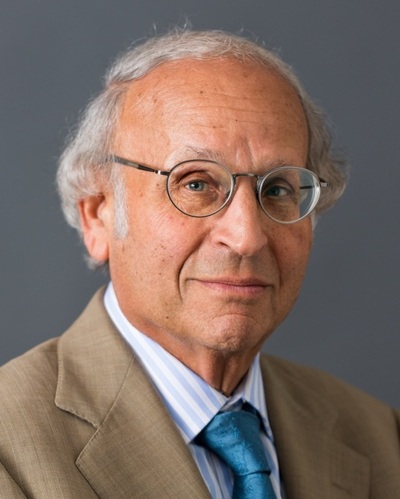
Arthur S. Levine, MD
Distinguished University Professor
Professor of Medicine, Molecular Genetics, and Neurobiology
Director, Assault on Alzheimer’s Program
Senior Vice Chancellor Emeritus, Health Sciences
John and Gertrude Petersen Dean Emeritus, School of Medicine
University of Pittsburgh
Dr. Levine has been active as a physician-scientist and academic leader for more than fifty years, including 31 years at the National Institutes of Health (NIH), first at the National Cancer Institute (as Chief, Pediatric Oncology Branch), and then at the National Institute of Child Health and Human Development (16 years as Scientific Director), with broad responsibility for dozens of laboratories and disciplines. He has authored or co-authored 300 research papers, chaired numerous scientific meetings and advisory boards, received many research and leadership awards, and served on multiple journal editorial boards. He was recruited to serve as the Senior Vice Chancellor for the Health Sciences and Dean of the School of Medicine at the University of Pittsburgh in 1998 and served in these roles until July 2020. In those positions, he was successful in greatly strengthening the University’s research program, establishing new Departments of Structural Biology, Computational Biology, Immunology, Critical Care Medicine, and Developmental Biology. The University of Pittsburgh provides an extraordinarily rich research environment with abundant core facilities and opportunities for collaboration as reflected in its 2025 ranking as 5th among U.S. universities in NIH funding.
Most relevant to Dr. Levine’s role as a clinical and research mentor are his five decades of work providing scientific vision and executive oversight to large research enterprises at the NIH, a large research-intensive public university (Pitt), and one of the largest nonprofit academic medical centers in the country (UPMC). Throughout these several decades of leadership, he has also maintained a molecular biology-based lab, well recognized for its contributions to tumor biology. Concurrent with stepping down from his large institutional responsibilities, he also decided to take on a new scientific focus – Alzheimer’s disease – realizing that his experience and expertise in DNA damage and repair in tumor cells could apply as well to DNA damage and repair in neurons. In addition to maintaining his own lab with this focus, he has organized a multidisciplinary speakers’ program, based on the molecular and cell biologic roots of Alzheimer’s disease, which has greatly stimulated collaboration.
Previous Recipients
| Year | The Albert C. Muse Prize for Excellence in Research and Advancement of Care | The Albert C. Muse Award for Excellence in Innovation and Service | The Albert C. Muse Award for Excellence in Innovation and Service |
|---|---|---|---|
| 2025 | Mark L. Urken, MD, FACS, FACE | Carl H. Snyderman, MD, MBA | Marci Lee Nilsen, PhD, MSN, RN, CHPN, FAAN |
| 2024 | Emily Y. Chew, MD | Andrew W. Eller, MD | Yuanyuan Chen, PhD |
| 2023 | Randal S. Weber, MD, FACS | Jonas T. Johnson, MD, FACS | Christopher Cunningham, PhD |
| 2022 | John E. Dowling, PhD | Joel S. Schuman, MD, FACS | Paul Kip Kinchington, PhD |
| 2021 | Robin T. Cotton, MD, FACS, FRCS(C) | Margaretha L. Casselbrant MD, PhD | Manoj Kumar, PhD |
| 2020 | Jean Bennett, MD, PhD | Albert W. Biglan, MD | Anthony St. Leger, PhD |
| 2019 | Lloyd B. Minor, MD | Eugene N. Myers, MD, FACS, FRCS Edin (Hon) | Stylianos Kouvaros, PhD |
| 2018 | Mark S. Humayun, MD, PhD | E. Ronald Salvitti, MD | |
| 2017 | Jennifer R. Grandis, MD | ||
| 2016 | Connie L. Cepko, PhD | ||
| 2015 | Maura L. Gillison, MD, PhD | ||
| 2014 | José Cunha-Vaz, MD, PhD | ||
| 2013 | Richard J.H. Smith, MD | ||
| 2012 | Jeremy Nathans, MD, PhD | ||
| 2011 | Nancy L. Snyderman, MD, FACS | ||
| 2010 | Carol L. Shields, MD | ||
| 2009 | Gregory T. Wolf, MD | ||
| 2008 | Philip J. Rosenfeld, MD, PhD | ||
| 2006 | Daniel M. Albert, MD, PhD | ||
| 2005 | James F. Battey, Jr., MD, PhD | ||
| 2004 | Judah Folkman, MD | ||
| 2003 | Wolfgang Steiner, MD |